

An entrepreneur with 30 years inside healthcare operations, Michael McKenzie has slept in the hospitals he builds for. That experience is exactly why SlicedHealth works.
Michael McKenzie wants to get one thing straight. He is not a technologist. He is a businessman and entrepreneur who uses technology to solve problems, and that distinction, he will tell you, is the whole ballgame. It shapes how he builds, how he leads, and why he ended up co-founding a company whose entire purpose is to recover money that rural and community hospitals have already earned but cannot see.
Over a career spanning three decades, McKenzie has served as CIO for hospital systems, international longevity clinics, and health insurance companies. He has consulted with more than 200 healthcare organizations on the adoption and implementation of health information technology. He has, by his own description, never been the ivory tower type. He has always been in the trenches, going so far as to sleep in the building when needed, all in the name of delivering the most seamless implementation experience possible for his clients.
That background is what brought him back to co-found SlicedHealth alongside CEO Reed Liggin and the rest of a team that had already built and sold one company together. The problems they saw the first time around had only gotten worse. And when they looked at what community hospitals were dealing with, the same need was still sitting there, unsolved.
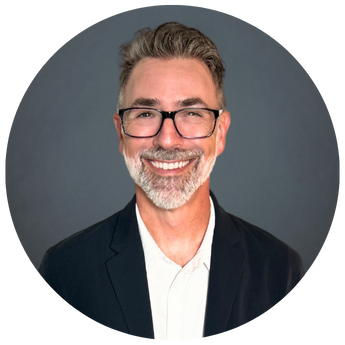
Michael McKenzie, Chief Operating Officer and Co-Founder
A Team That Had Already Proved Itself
McKenzie and Liggin first worked together at McKesson, where they built a working relationship and a shared understanding of what large health systems had that smaller providers did not. In 2009, they co-founded RazorInsights, a comprehensive cloud-based EHR system built specifically for rural and community hospitals. The platform covered everything from clinical departments and nursing to the business office, billing, and the emergency department. It was one of the first of its kind in the cloud for that market segment.
When athenahealth acquired RazorInsights in January 2015, the team dispersed into other roles. But the experience had left a mark. The years of working directly inside community hospitals, not just selling to them, had shown McKenzie and his colleagues exactly what those facilities were up against. When the team came back together in 2019, the conversation did not take long. They had a proven rapport, a clear problem to solve, and a market that still had no good answer to it.
"We had a good rapport, and we had one success already in this market," McKenzie said. "We thought putting this team together again could give us many more."
What Living at a Hospital Teaches You
During the RazorInsights years, when the team was implementing their EHR software at rural hospitals across the country, McKenzie did not just visit the facilities. He moved in. He would stay for seven days at a stretch, sleeping in a hospital room, walking out onto the nursing floor in the early morning to make sure the implementation was working.
""I don't think you get any more up close and personal than just living at the hospital," he said. "Whether that was right or wrong, we actually did it."
That kind of proximity changes how you understand a problem. McKenzie saw nursing staff managing multiple departments simultaneously. He saw administrative teams stretched far past capacity, doing jobs that in a larger system would have been handled by two or three people each. He saw the gap between what these facilities needed and what they had, and it was not a small one.
"There are just not enough people inside those walls to serve the healthcare needs of the community," he said. "We saw a big opportunity to revisit that gap and build something around the resource constraints of those facilities."
That experience, combined with 30-plus years of serving as a working CIO inside healthcare organizations of all kinds, is what informs how McKenzie thinks about product design. He is quick to point out that no course, no YouTube video, and no certification can replicate it. "That is 35 years of experience informing what the needs of these organizations actually are," he said. "That is the differentiator."
Results, Not Tasks
McKenzie has a phrase he returns to often when describing how he measures whether SlicedHealth is doing its job. "Time to value is the metric," he said. "If a task is taking a hospital 30 minutes, the question I ask is whether technology can shorten it to 30 seconds."
That framing reflects something deeper about how he thinks about the work. Activity and output are not the same thing. "Furious activity and kinetic energy do not always signify meaningful results," he said. "What dictates the day at SlicedHealth is results, not tasks. Show me the result, and I will show you the solution."
For community hospitals, that philosophy has a direct financial meaning. Most of the facilities SlicedHealth works with have never had a payer contract management system. They have been operating blind, trusting that what payers send is what they agreed to, and in many cases discovering too late that the rates have drifted significantly from what was negotiated. The platform gives them real-time visibility into every claim, every contract, and every reimbursement, and it does so without requiring them to hire additional staff or change existing workflows.
An Uneven Playing Field
McKenzie describes the current state of the payer-provider relationship in direct terms. Large payers have sophisticated technology working in their favor. Community hospitals, historically, have had very little to counter it.
"Right now it is their bot against the hospital's bot, or lack thereof," he said. "We need to level that playing field. And the way we do it is through technology that creates real efficiencies for the hospital side."
That inequity is not new, but it has sharpened in recent years as payer organizations have invested more heavily in AI and data analytics. SlicedHealth's response is to bring the same caliber of contract intelligence to the community hospital market, at a price point those hospitals can actually afford, with an implementation model that does not require them to bring on dedicated staff to manage it.
On the question of AI's role going forward, McKenzie is precise about where the line sits. "Humans are going to have to remain in the loop," he said. "AI will not make a consequential decision autonomously. It is going to surface the information, flag it, draft it. But a human always makes the call. That is the principle we hold."
The Why Underneath the Work
McKenzie grew up in Pike Road, a rural part of Montgomery, Alabama, on a mini horse farm where a fair amount of daily life involved working outside and keeping things running. Healthcare in that community meant smaller facilities, under 100 beds, and also the military medical services at what was then Maxwell Air Force Base, where his family went for prescriptions and general care.
That background stayed with him. When he talks about why he cares about community hospitals, he does not reach for polished language. He talks about what happens when one of them closes.
"If a hospital goes, so goes the community," he said. "These organizations are not just a place to get care. They are often the town's primary employer. In some communities, they are the last best chance of hope for patients who cannot get anywhere else in time. If that hospital is fighting, I am in its corner. I am putting everything I know about business and everything I know about technology to solve their problems."
His daughter is currently at West Point. He mentions her when talking about why people do the work they do, the idea that the best motivation is tied to something beyond the immediate task. For him, that connection is genuine, and it runs through how he approaches every decision at SlicedHealth.
Meet the rest of the SlicedHealth founders →
Building Something That Lasts
What McKenzie is most wary of is what he calls the "good enough" approach. Companies that build software checking the obvious boxes but have never actually worked inside the organizations they are building for. Systems that look right in a demo but do not hold up against the real complexity of running a community hospital on a lean budget.
"You can watch every YouTube video ever made on contract lifecycle management and still not understand what these facilities actually need," he said. "What informs our work is having been there, having done it, and having learned what breaks when you are not paying attention."
For the community hospitals working with SlicedHealth, that depth of experience shows up in practical terms: faster implementation, less administrative burden, and a platform built around their operations rather than one that asks their operations to bend around the software. Every dollar recovered matters, and McKenzie knows it. For the hospitals he is fighting for, it is not abstract. It is survival, and it is the reason he keeps showing up.
To learn more about how SlicedHealth can help your organization, visit slicedhealth.com or schedule a one-on-one demo.
About SlicedHealth
SlicedHealth brings clarity and control to the revenue cycle for health systems and community hospitals. Grounded in hands-on support and built on a rules-based foundation, our platform equips hospital CEOs and CFOs with the tools they need to optimize contract performance, streamline operations without additional staff, and maximize revenue recovery. Our next-generation contract management platform delivers real-time visibility into hospital payer contracts and revenue cycle performance. Driven by SlicedIQ, our AI-powered engine that provides detailed, easy-to-use insights for contract modeling and variance analysis, the SlicedHealth platform automates better decisions across the entire revenue cycle. From claim estimation and business intelligence to a robust price transparency module built for compliance, SlicedHealth helps all hospital leaders recover revenue lost to denials and underpayments. Learn more at https://slicedhealth.com